
Mobile Ignition Repair and Cylinder Replacement in San Diego
Key will not turn, key stuck, or the car will not crank? We diagnose the ignition at your car and fix it on-site. No dealer tow needed.
★ 5.0 Rating · 200+ Reviews · Licensed #LCO7479
What Actually Fails in a Car Ignition
Car ignitions are two parts stacked together. The cylinder is the mechanical piece where you insert the key, full of small spring-loaded wafers that line up with the cuts on your key. Behind it sits the ignition switch, an electrical component that sends the start signal to your starter motor. When people say "the ignition is bad," it usually means one of those two parts is failing. Sometimes both. The fix is completely different depending on which one it is, so a proper diagnosis matters. Locksmith Magic is a California-licensed locksmith (LCO7479) working ignition jobs across San Diego every week.
Ignition problems almost always give warning signs before they leave you stranded. A key that needs jiggling to turn. A morning where it takes three tries to start. A cylinder that feels loose. A stuck key that eventually comes out after some coaxing. Most people ignore those signs until the car will not start at all, usually in a parking lot at the worst possible moment. If you catch the problem in the warning phase, we can often fix it with a wafer kit or a cylinder rebuild instead of a full replacement. That saves real money.
Call (619) 416-2467 or text with the year, make, and model, plus what the car is doing. We will give you an honest quote before a van heads out. Every ignition job carries a 6-month warranty on parts and labor.
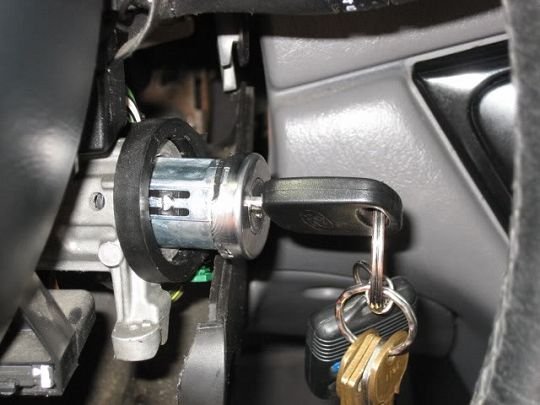
Our Ignition Repair Solutions in San Diego
Ignition Cylinder Rebuild
For cylinders with worn or damaged internal wafers, we can often disassemble the unit, replace the specific worn wafers, and reassemble it. Cheaper than a full cylinder swap.
Full Cylinder Replacement
When the cylinder housing is cracked, wafers are broadly worn, or an attempted theft chewed up the assembly, we install a new OEM-quality cylinder and rekey it to your existing door key when possible.
Ignition Switch Replacement
When the electrical switch behind the cylinder has burned-out contacts and the car cranks intermittently or not at all, we swap the switch on-site. This is a wiring and connector job, not a lock job.
Stuck Key Removal
If a key refuses to come out of the ignition, do not force it. We remove it cleanly and diagnose the retention problem in the cylinder before it turns into a broken-key extraction.
Transponder Reprogramming After Repair
When a new cylinder gets installed, any transponder key has to be reprogrammed to your immobilizer. We handle the mechanical and the electronic side in the same visit.
Ignition Problems Sorted by What the Key Is Doing
Every ignition call we take starts with the same question: what is the key actually doing when you try to start the car? The answer usually points us at the right diagnosis before we even arrive.
The key will not turn at all
Most common cause is worn wafers inside the cylinder. The wafers no longer sit at the right height when the key is inserted, so the cylinder plug will not rotate. Second most common cause is a steering wheel lock binding against the ignition. If the car was parked with the wheels turned, the wheel locks harder against the column and the ignition binds too. Try turning the steering wheel side to side while jiggling the key gently. If that does not free it up, the wafers or the cylinder itself are the problem and forcing the key any harder will snap it off inside.
The key turns but the engine will not crank
This one points at the switch, not the cylinder. When the ignition switch contacts wear out, the cylinder rotates cleanly but the electrical signal never reaches the starter. Sometimes it cranks intermittently. Sometimes not at all. Before you conclude it is the switch, check the obvious stuff first: dead battery, dashboard lights bright or dim, any clicking from the starter when you turn the key. If the dashboard goes dark when you turn the key, that is the switch. If everything stays bright but there is silence, could be the switch or the starter itself. We test both on-site with a scan tool.
The key is stuck and will not come out
A retention problem. There is a small mechanism inside the cylinder that releases the key only when the ignition is in the Off position. When that retention pin wears out or a wafer is stuck at the wrong height, the key gets trapped. Do not yank it. You will either break the key or damage the cylinder further. We can free the key without damaging either. If someone already forced it and snapped a piece off inside, our broken key extraction service handles that too, in the same visit.
The key just snapped inside the cylinder
Usually happens when the key was already thin from years of wear, or the driver was applying extra force to compensate for a sticky cylinder. Do not try to fish it out with pliers or a screwdriver. That pushes the fragment deeper and can turn a $150 job into a $400 job. Call us. We use spiral extractors made for this, and once the fragment is out we cut a fresh key on the spot.
The dashboard security light is on and the car will not start
Modern cars tie the ignition to the immobilizer, which tries to authenticate your key via a transponder chip before allowing a start. If the chip is not communicating, the key icon lights up on the dash and the engine will crank but not start. Causes: dying chip in the key, damaged immobilizer coil around the cylinder, cylinder replacement not properly re-registered to the immobilizer. We diagnose the electronic side with the same visit that handles the mechanical side.
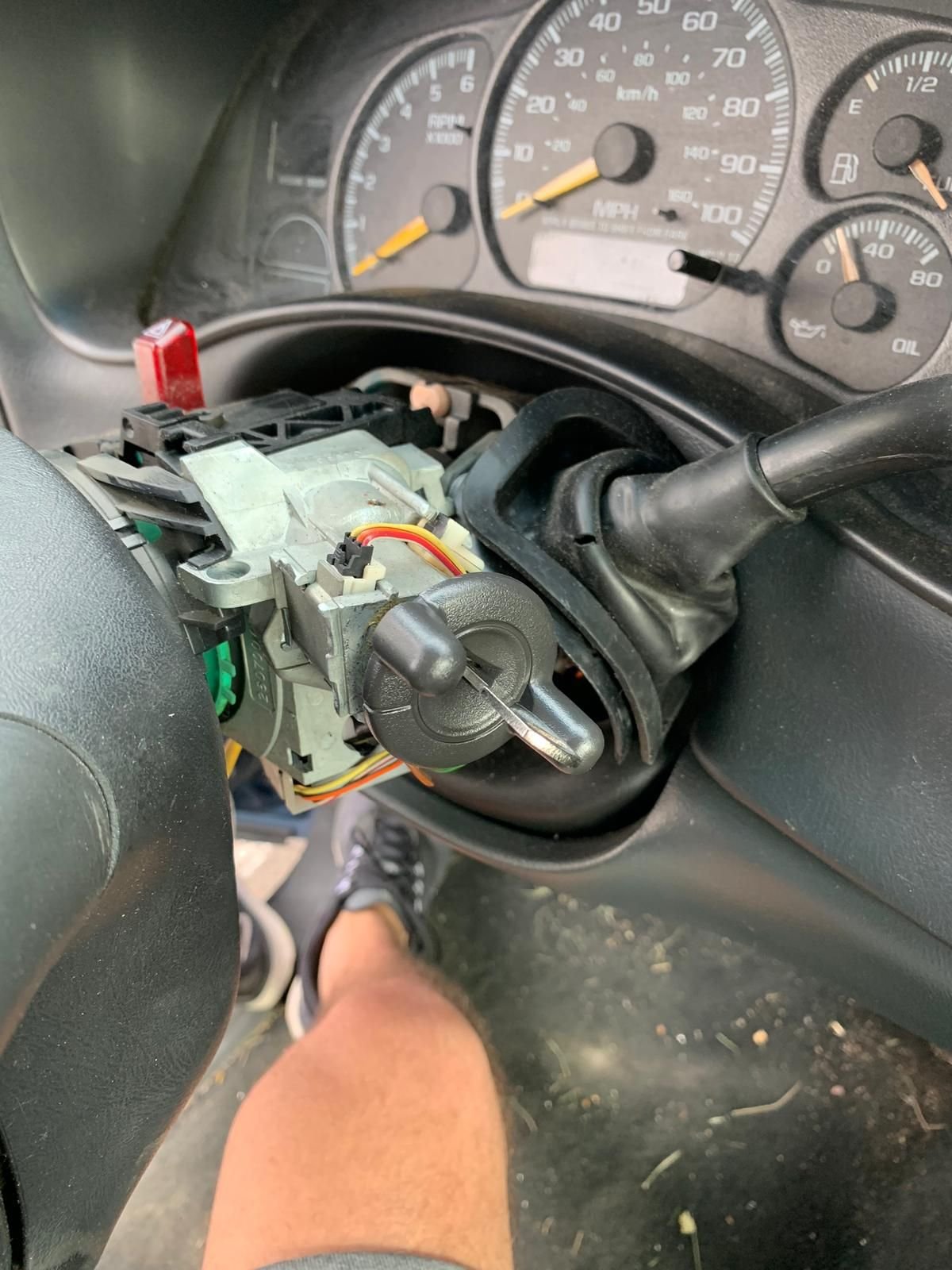
Repair or Replace: When Each One Is the Right Call
The question we get asked most is whether the ignition needs a repair or a full replacement. Honest answer: it depends on what is worn out and how badly.
Repair works when the cylinder housing is still solid, most of the wafers are still functional, and the switch is working. In that case we can pull the cylinder, replace the two or three worn wafers, clean and lubricate the internals, reassemble, and put it back in. Same-day fix, much cheaper than replacement, and you keep the original key. This describes maybe 60 to 70 percent of the ignition calls we take.
Full cylinder replacement is the right call when the housing is cracked, when most of the wafers are worn past the point of repair, when a key broke off and gouged the keyway, or when someone tried to punch or drill the ignition during an attempted theft. In these cases the cylinder itself is beyond a rebuild. We install a new one, rekey it to your existing door key when your make allows it (so you still have one key for the whole car), and reprogram any transponder that needs it.
Switch replacement is a separate job. The switch is the electrical component behind the cylinder. When it fails, the cylinder still turns but the starter never engages. This has nothing to do with wafers or keys. It is a wiring and connector job. Sometimes the switch fails alone, sometimes at the same time as the cylinder. We test the switch separately from the cylinder so we do not sell you parts you do not need.
Bottom line: we will tell you which one applies before any work starts, and we will not push replacement when a rebuild will do the job.
Ignition Failure Patterns by Make
We see certain patterns often enough to be predictable. If you drive one of these, the fix is probably shorter than you think.
Honda cylinder wear. Civic, Accord, CR-V, and Odyssey from roughly 2003 to 2015 wear their ignition wafers out faster than average. Doubly true if the owner ran a heavy key ring for years. We stock Honda cylinders and wafer kits in the van and can rebuild or replace on the spot. Common call from higher-mileage Hondas in Poway and Rancho Bernardo.
Ford switch failure. F-150, Escape, Explorer, and Focus in a wide range of years develop worn switch contacts. Symptom is a car that cranks fine one morning and refuses to crank the next, or one that stalls out at a red light. Switch replacement runs about an hour, and we do it at your driveway.
Toyota stuck keys. Camry, Corolla, and RAV4 sometimes get keys stuck in the ignition because of a worn shift interlock cable, not the cylinder itself. Easy to misdiagnose as a lock problem when it is actually a shifter linkage problem. We check both.
GM Passlock and Passkey activation. Chevrolet, GMC, Buick, and older Saturns can trip into anti-theft mode where the security light stays on and the engine cranks but will not start. Usually a sensor failure inside the cylinder housing or a bad ground. We know the reset procedure and the sensor part. Common on higher-mileage Chevy pickups in El Cajon and Santee.
Do not see your make listed? We handle every mainstream domestic and Japanese brand on-site. Call (619) 416-2467 with the year, make, and model, and we will confirm before dispatching.
Serving San Diego & Surrounding Areas
We provide fast, reliable locksmith services to over 80 neighborhoods across San Diego County. Wherever you are, we'll be there in 15-30 minutes.
Called Locksmith Magic when I was locked out of my house late in the evening. They arrived in about 20 minutes and had me back inside in no time. Very professional and reasonably priced. Highly recommend!
Needed all the locks rekeyed on my new home. The technician was knowledgeable, efficient, and explained everything. Great experience from start to finish. Will definitely use again.
Lost my car key and was stranded. Locksmith Magic came out quickly, made a new key on the spot, and programmed it perfectly. Lifesaver! Thank you for the fast service.
Ignition Repair FAQ: San Diego
What does ignition repair cost in San Diego?
Cost varies by what actually failed and by the make and model. A wafer rebuild is the cheapest option. A full cylinder replacement costs more because of the new part and any key programming. A switch replacement lands in between. Give us the year, make, model, and what the car is doing when you call (619) 416-2467, and we will quote before a van drives out.
How long does the repair take at my car?
Most ignition repairs take 30 minutes to 2 hours. Wafer rebuilds and stuck-key work are usually 30 to 45 minutes. A full cylinder replacement with transponder reprogramming runs 1 to 2 hours. We give an accurate time estimate after the initial diagnosis on site.
Can you do this at my house or office parking lot?
Yes, that is our default. Our vans carry cylinders, wafer kits, switches, and programming tools for the makes and models we see most. In almost every case we complete the work right where the car is sitting. Only rare electronic module failures on newer cars might need a dealer visit, and we tell you that upfront before you spend money.
My key turns but the engine will not crank. Is that the ignition?
Probably the ignition switch (the electrical piece behind the cylinder), but not always. A dead battery, a failed starter motor, or a transponder chip that stopped communicating with the immobilizer can all cause the same symptom. We test all four on-site so we do not swap parts that were not broken.
Is it safe to drive with a bad ignition switch?
No. A failing switch can shut power to the engine and electrical systems while you are driving. That means losing power steering, power brakes, and dashboard warnings at freeway speed. If the car cranks fine but stalls out or the dashboard flickers when you hit bumps, get the switch replaced before it fails in traffic.
Will I need a new key after the repair?
Depends on the fix. If we rebuild your existing cylinder by replacing worn wafers, your original key still works. If the cylinder itself gets replaced, we can usually rekey the new cylinder to your existing key so you keep using one key for the whole car. Any transponder in the key gets reprogrammed to the immobilizer in the same visit.
What causes ignition cylinders to fail in the first place?
Normal wear from years of daily use is the biggest one. Heavy keychains pulling sideways on the key while it is in the ignition speed that wear up significantly. Dirt in the keyway grinds the wafers. Using worn or poorly cut duplicate keys chips the wafer edges. Try to keep the ignition key on a light ring, and if the cylinder feels sticky, get it looked at before it strands you.
Cheaper than the dealer?
Usually yes. Dealers charge shop labor rates, mark up parts, and typically require you to tow the car in. Our mobile work skips the tow entirely and our labor rates are lower. For older or higher-mileage cars especially, we can often rebuild what the dealer would just replace.